

Just Getting Started with the USMLE Step 1/COMLEX Level 1? This Beginner’s Guide Has You Covered

Introduction: The First Big Hurdle Every medical student knows that Step 1 or COMLEX Level 1 is a defining moment. Even though Step 1 has shifted to pass/fail, both exams still carry weight, and both require months of preparation. The good news is that the students who succeed aren’t necessarily...
What to Bring to Step 1: Your USMLE Exam Day Checklist

For many medical students, the USMLE Step 1 is one of the most stressful and overwhelming experiences of medical school. However, with proper planning and organization, you can make test day feel more manageable. In this post we will not only provide you with a USMLE Step 1 checklist of...
What Is a Good USMLE Step 1 and USMLE Step 2 Score?

FAQ Section 1. Is Step 1 still scored? No, Pass/Fail since Jan 2022. Passing is essential, but more importantly, Step 1 builds the foundation for Step 2. 2. So which score matters now? Step 2 CK. Scored 1-300; Pass = 218; Average = 245-247 As part of their holistic...
USMLE Test Accommodations Process Changes in 2026: What Medical Students and IMGs Need to Know

The United States Medical Licensing Examination (USMLE) has announced an important update to its test accommodations request process that will affect all Step exam candidates, including international medical graduates (IMGs), beginning June 1, 2026. If you plan to request testing accommodations for USMLE Step 1, Step 2 CK, or...
Why Students Forget High-Yield Concepts – And How Mnemonics Fix It

If you’ve ever stared at a USMLE Step 1 question and thought, “I know I’ve seen this before… why can’t I pull it out of my brain?”, you’re not alone. In fact, forgetting high-yield material is one of the most universal (and frustrating) experiences in medical school. It happens to...
USMLE Step 1 Mnemonics: Master Your Study Techniques
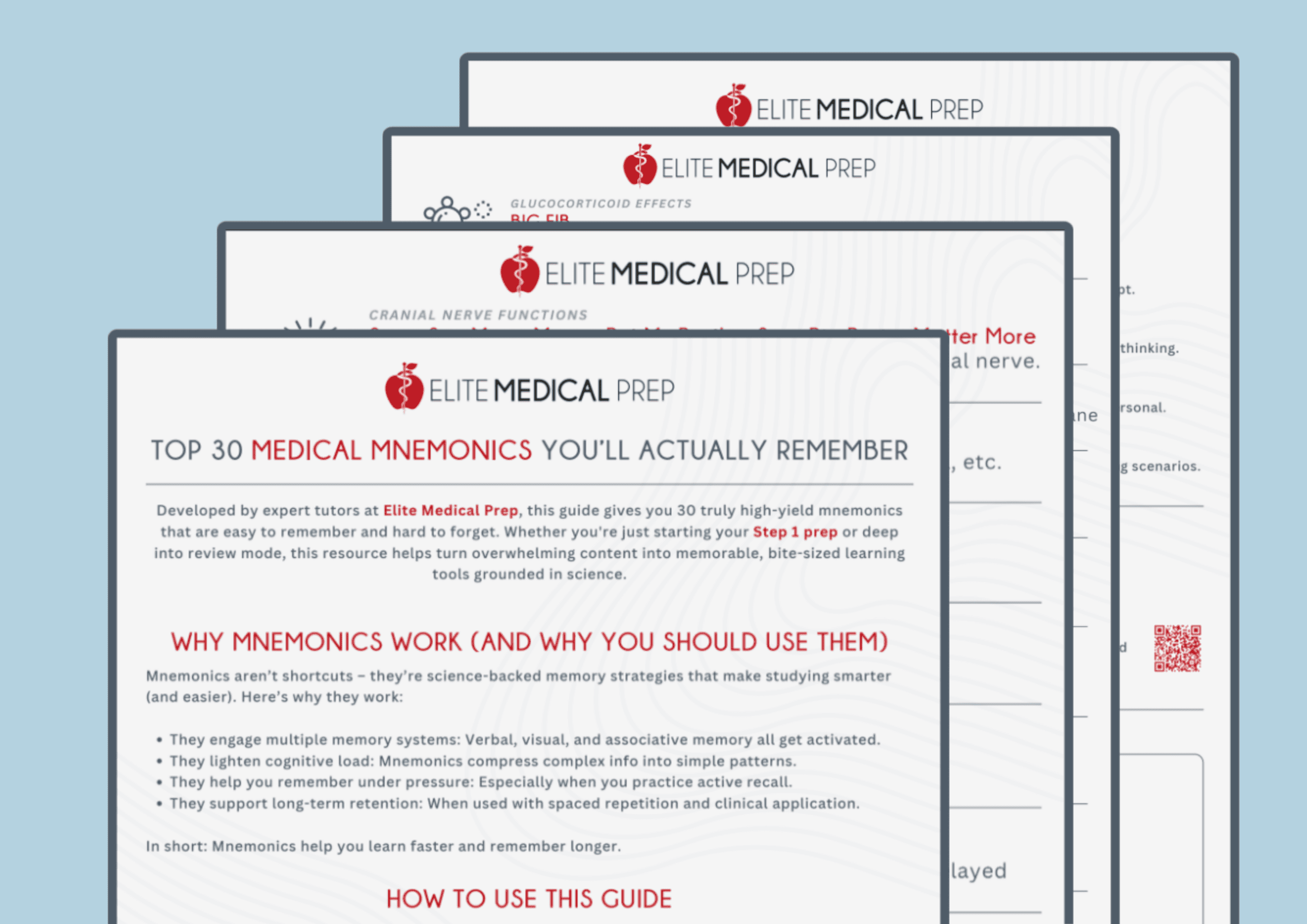
From the perspective of a med student-turned-tutor who has used them in the trenches. Want the Science Behind It? If you’ve ever found yourself reciting “Some Say Marry Money, But My Brother Says Big Brains Matter More” while trying to remember the cranial nerves, you already know the quiet...
From USMLE Step 1 to Step 2 CK: What Actually Changes (and What Still Matters)

If you’ve recently passed Step 1 or you’re preparing to take Step 1 and Step 2 close together, you’ve probably heard that Step 2 is just Step 1 with longer clinical vignettes. While this is a commonly shared idea, it doesn’t quite hold up. Step 2 isn’t simply a longer...
The Ultimate 2026 Shelf Exam Guide: Step-by-Step Strategies for Every Rotation

This blog was originally published in October 2025 by Dylan Eiger and updated in April 2026 by Kala Frye Bourque. NBME shelf exams have evolved. Today’s shelves are longer, more reasoning-focused, and often mirror Step 2 CK in style. They emphasize next-step management, guideline-based care, and outpatient medicine more...
Top 10 Step 1 Topics You’ll Revisit on Step 2 CK

Preparing for Step 2 CK can feel like a fresh start, but in reality, many of the foundational topics from Step 1 resurface in a more clinical and applied context. Students often wonder which Step 1 topics they should review before diving into Step 2 CK prep. While Step 2...
USMLE for IMGs: Navigating Language and Clinical Vignette Challenges

Preparing for the USMLE Step exams as an international medical graduate can feel like learning a new language - sometimes quite literally. Many IMGs come into the process with strong medical knowledge, solid clinical experience, and impressive academic backgrounds, yet still feel blindsided by USMLE-style questions. It’s frustrating to know...